
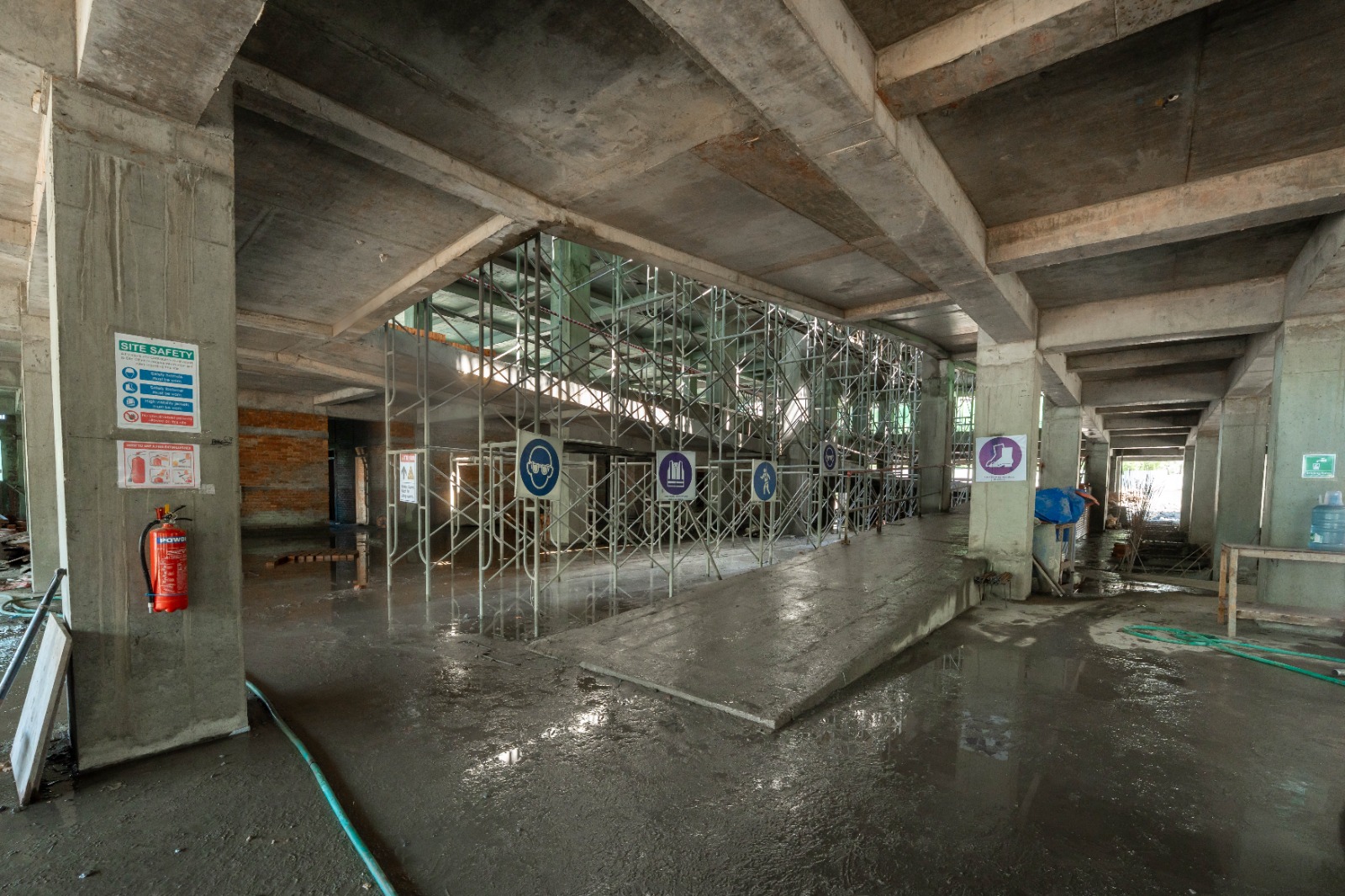
Concrete often symbolizes progress; the taller the tower, the stronger the economy. But in the context of urban expansion, especially in developing regions like Nepal, the true foundations of growth extend far beyond physical materials. Good architecture and structural design must also account for culture, environment, and community, the unseen elements that hold cities together as they evolve.
As more towns transform into cities and cities stretch upward and outward, it’s critical to rethink what it means to “lay a strong foundation.” The answer lies not only in better materials but also in better intent.
Building Beyond the Blueprint
Architectural design today is more than just arranging built forms. While structural integrity and durability remain essential, the early phases, including master planning and schematic design, must also reflect local context. Urban growth disconnected from local culture often results in soulless developments that may function but fail to resonate.
Understanding community needs, mobility patterns, and future land use is just as foundational as concrete columns. This kind of design thinking ensures cities remain not only livable but deeply human.
Environmental Resilience in Urban Architecture
Urban growth in Nepal and similar regions often happens near ecologically sensitive zones, hillsides, floodplains, and seismic fault lines. Architecture and structural planning in such environments must prioritize sustainability and resilience.
This includes:
- Integrating passive design for energy efficiency
- Choosing materials based on environmental impact
- Conducting soil investigations and slope stability tests
- Designing systems to withstand seismic activity
These steps are critical to creating structures that not only stand tall but also stand the test of time.
Smart Density Without Compromise
As populations grow, high-density planning becomes inevitable. But density doesn’t have to mean discomfort. A well-executed master plan can ensure open spaces, natural light, ventilation, and connectivity, elements vital for mental and physical well-being in dense urban environments.
Interior design and spatial planning also play a significant role here. Instead of maximizing units per square meter, the focus should be on the quality of space: how it feels, functions, and adapts over time.
Data-Driven Design: From Surveys to Structural Analysis
Accurate data is the backbone of responsible development. Field surveys, mapping, and as-built drawings provide critical insights before construction even begins. Meanwhile, stress analysis, seismic modeling, and MEP design ensure that buildings function efficiently once built.
Municipal approvals are not just regulatory hoops; they’re checkpoints that align growth with safety and long-term vision. Skipping these steps or treating them as formalities weakens the foundation of an entire urban system.
A Broader Definition of Strength
True urban strength isn’t measured by how fast concrete sets or how high a structure rises. It’s measured by how well a city endures socially, structurally, and environmentally.
Urban design that integrates technical precision with cultural and ecological sensitivity will always outlast projects focused solely on physical construction. In a time when urban growth is both a challenge and an opportunity, redefining what we consider a “foundation” may be the most important step we take.