
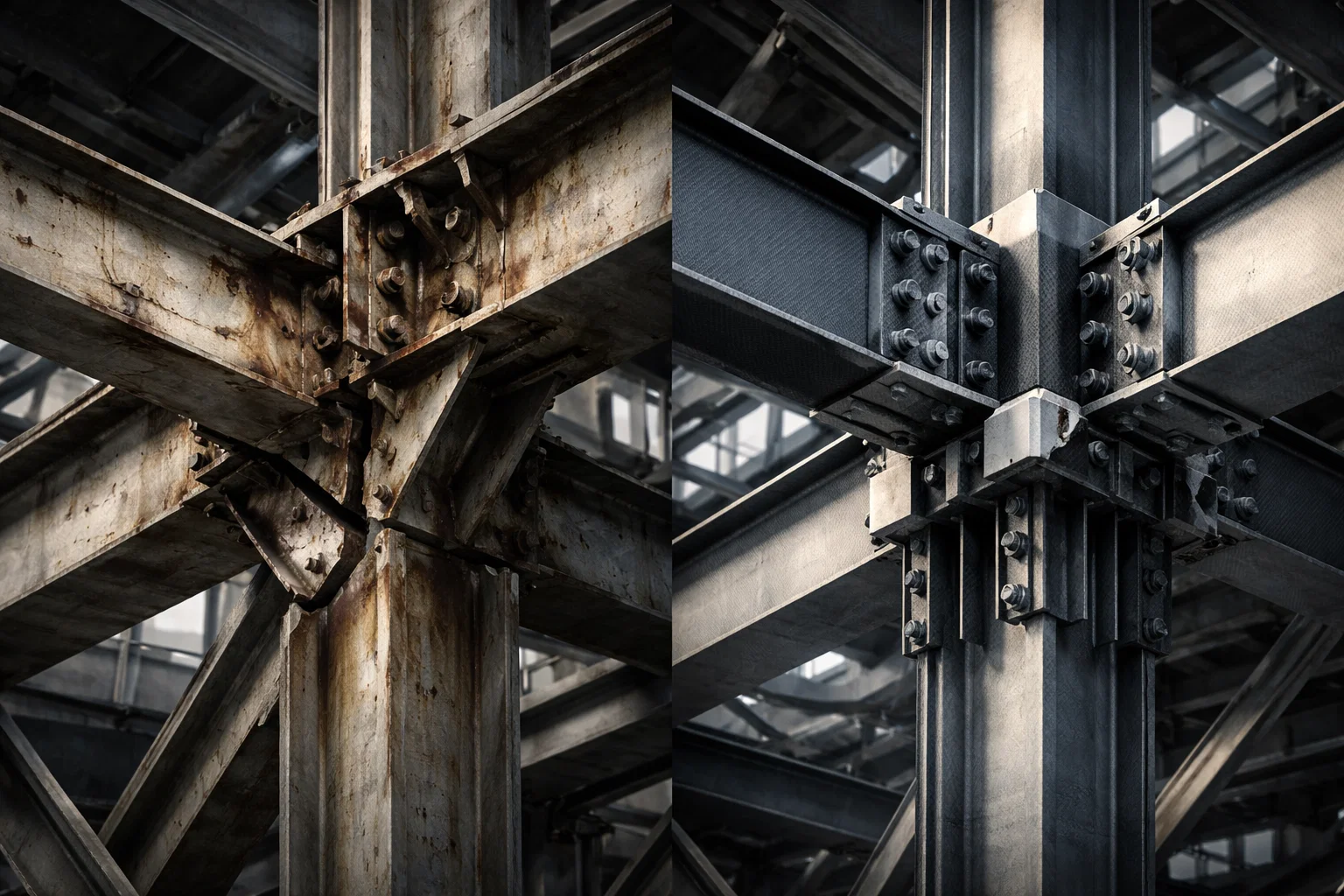
Steel has long been considered one of the most reliable materials in modern construction. Its high strength, flexibility, and adaptability have made it a preferred choice for commercial buildings, industrial structures, and increasingly, large residential projects. However, despite its advantages, structural failures in steel buildings continue to occur, often revealing critical lessons about material selection, detailing, and construction practices.
For architects, these failures are not merely engineering setbacks—they are reminders that material choice must be guided by context, performance, and long-term behavior. Examining why steel structures fail helps architects make more informed decisions and reinforces the importance of choosing materials that align with climate, use, and structural intent.
Understanding Structural Failures in Steel Buildings
Structural failure in steel buildings rarely results from the material itself. Instead, it is usually the outcome of inappropriate material selection, poor detailing, inadequate protection, or construction-stage errors. Common causes include corrosion, connection failure, excessive deflection, fire exposure, and fatigue over time.
In regions like Nepal, where buildings are exposed to seismic activity, humidity, and fluctuating temperatures, steel structures demand careful specification and execution. When these factors are overlooked, even high-strength materials can underperform.
Corrosion: A Primary Cause of Steel Failure
One of the most frequent contributors to steel structural damage is corrosion. Moisture ingress, inadequate coatings, and exposure to aggressive environments gradually weaken steel sections, reducing their load-bearing capacity.
Architectural detailing plays a crucial role here. Poor drainage design, exposed joints, and insufficient weather protection accelerate corrosion. These failures emphasize the need for material systems, not isolated materials—where steel is paired with proper finishes, protective layers, and compatible construction methods.
Connection Failures and Structural Integrity
Steel buildings rely heavily on connections—bolts, welds, and joints that transfer loads across the structure. Many documented failures originate not from the steel members themselves, but from poorly designed or executed connections.
For architects, this highlights the importance of early coordination between architectural design and structural engineering. Material selection must consider not only strength but also how elements connect, expand, and behave under load, especially during seismic events.
Fire Performance and Material Limitations
While steel is non-combustible, it loses strength rapidly when exposed to high temperatures. Structural failures during fires often occur due to insufficient fire protection, such as missing fireproof coatings or inadequate enclosure systems.
These incidents remind architects that choosing steel alone is not enough. Material systems must be evaluated holistically—integrating fire-resistant finishes, compartmentalization strategies, and alternative materials where appropriate.
Lessons for Choosing Better Materials
Structural failures in steel buildings offer valuable lessons that extend beyond steel itself:
Context Matters More Than Popularity
No material is universally ideal. Climate, building use, scale, and maintenance capacity must guide material selection.
Material Performance Over Time Is Critical
Architects must consider how materials age, react to moisture, temperature changes, and structural stress—not just their initial strength.
Hybrid Material Strategies Improve Resilience
Combining steel with concrete, timber, or masonry can improve performance, reduce risk, and enhance durability when designed thoughtfully.
Detailing Is as Important as Material Choice
Even the best materials fail when detailing, protection, and execution are inadequate.
Rethinking Steel Use in Contemporary Architecture
Steel remains a valuable structural material when used appropriately. However, architectural practice today demands critical evaluation rather than default selection. Advances in sustainable materials, engineered timber, and improved concrete technologies offer alternatives that may perform better in certain contexts.
For architects, the goal is not to avoid steel, but to understand its limitations and use it where it performs best, supported by complementary materials and sound detailing.
The Architect’s Responsibility in Preventing Structural Failure
Architects play a central role in preventing structural failures by:
- Selecting materials suited to local conditions
- Ensuring proper integration of structural and architectural systems
- Prioritizing durability, maintenance, and safety
- Coordinating closely with engineers and contractors
At JK Associates, material decisions are informed by performance, context, and long-term impact—ensuring that structural integrity is achieved through thoughtful design rather than assumptions.
Conclusion
Structural failures in steel buildings are powerful reminders that material strength alone does not guarantee structural success. They teach us to look beyond specifications and focus on performance, compatibility, and execution.
By learning from past failures, architects can make better material choices—creating buildings that are safer, more resilient, and better suited to their environment. For architecture firms like JK Associates, these lessons reinforce a design philosophy rooted in responsibility, precision, and long-term value.