
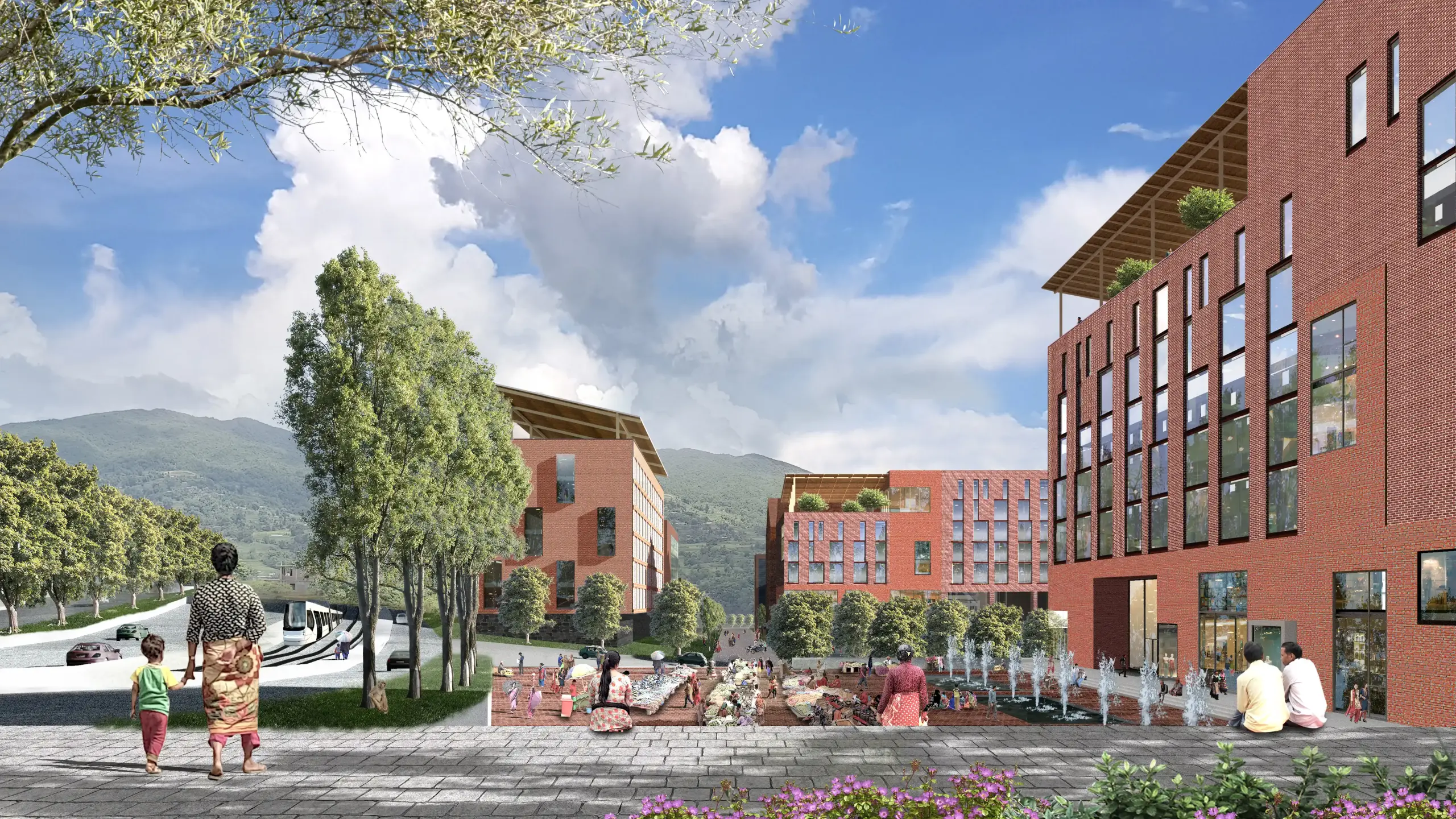
The global hospitality industry is undergoing a significant transformation as travelers become more environmentally conscious and increasingly seek authentic connections with the destinations they visit. Sustainable resort architecture is playing an important role in this shift, changing how resorts are planned, designed, constructed, and operated.
Modern resort luxury is no longer defined only by scale, premium finishes, or visual grandeur. Increasingly, it is also associated with environmental responsibility, cultural authenticity, guest well-being, and efficient use of resources.
By combining climate-responsive planning, sustainable materials, passive design strategies, renewable energy, and thoughtful integration with the surrounding landscape, sustainable architecture is helping shape a new generation of hospitality destinations.
What Is Sustainable Resort Architecture?
Sustainable resort architecture is an approach to hospitality design that considers a building’s environmental impact, resource consumption, operational performance, and relationship with its surrounding context throughout its lifecycle.
Rather than treating sustainability as an additional feature, the approach integrates environmental considerations into fundamental architectural decisions such as:
- Site selection and planning
- Building orientation and massing
- Climate-responsive design
- Natural ventilation and daylighting
- Material selection
- Water management
- Energy efficiency
- Landscape integration
- Construction methods
- Long-term building performance
For resorts, these considerations are particularly important because hospitality developments often occupy environmentally sensitive landscapes and operate continuously throughout the year.
A New Definition of Resort Luxury
Modern travelers increasingly value experiences that are immersive, authentic, and environmentally responsible. Sustainable architecture responds to this demand by combining high-quality hospitality environments with climate-conscious design.
Instead of imposing buildings onto a landscape, sustainable resort design works with the site’s existing characteristics, including:
- Local climate and topography
- Existing vegetation and ecosystems
- Indigenous materials and craftsmanship
- Solar exposure and prevailing winds
- Natural drainage patterns
- Local cultural and architectural traditions
In this context, luxury can come from thoughtful simplicity, natural materials, comfortable indoor environments, and a strong connection between architecture and landscape.
Designing With Nature, Not Against It
Sustainable resort architecture begins with an understanding of the site.
A mountain resort, coastal property, forest retreat, and desert destination will each require different responses to climate, terrain, water availability, solar exposure, and environmental conditions.
Key strategies can include:
- Preserving existing vegetation and sensitive ecosystems
- Minimizing unnecessary land disturbance
- Following natural contours where practical
- Orienting buildings to improve solar and thermal performance
- Using landscape features for shade and microclimate control
- Protecting natural drainage patterns
- Selecting building forms appropriate to local climatic conditions
This site-responsive approach can reduce environmental disturbance while creating a stronger relationship between the resort and its surroundings.
Climate-Responsive Design for Resort Environments
Climate-responsive architecture is particularly valuable in resorts because guest comfort is closely connected to the quality of the indoor and outdoor environment.
Building orientation, window placement, shading, insulation, thermal mass, and natural ventilation can all influence thermal comfort and energy demand.
Depending on the climate, designers may incorporate:
- Cross-ventilation
- Shaded outdoor spaces
- Deep overhangs and external shading
- Courtyards
- High-performance building envelopes
- Roof insulation
- Carefully positioned openings
- Daylighting strategies
- Thermal mass and night-time ventilation where appropriate
The specific combination should respond to the site’s climate rather than follow a universal design formula.
Biophilic Design and Guest Well-being
Sustainable resort design is not limited to reducing environmental impact. It can also influence how guests experience a destination.
Biophilic design incorporates meaningful connections with natural elements and processes into the built environment. In resort architecture, this can involve:
- Abundant natural daylight
- Views toward landscapes
- Natural ventilation
- Courtyards and gardens
- Water features
- Natural materials and textures
- Indoor-outdoor transitions
- Landscaped pathways and gathering spaces
These strategies can create environments that feel calmer and more connected to their surroundings while strengthening the overall guest experience.
Improving Energy and Resource Efficiency
Resorts can have significant energy and water requirements because of accommodation, kitchens, restaurants, pools, spas, laundry, lighting, cooling, heating, and other hospitality services.
Sustainable architecture can address these demands through integrated building and infrastructure strategies.
Forward-looking resort developments may incorporate:
- Solar energy systems
- Energy-efficient lighting and equipment
- High-performance insulation and glazing
- Building management systems
- Rainwater harvesting
- Greywater treatment and reuse where appropriate
- Water-efficient fixtures
- Efficient hot-water systems
- Locally sourced and durable materials
The objective is not simply to add individual green technologies. It is to create a coordinated building system that reduces resource consumption while maintaining guest comfort and operational performance.
Sustainable Materials and Low-Carbon Construction
Material selection is another important component of sustainable resort architecture.
Architects and project teams can consider the environmental impact, durability, availability, maintenance requirements, and lifecycle performance of materials rather than evaluating them only on initial cost or appearance.
Depending on the location and project requirements, strategies may include:
- Locally sourced materials
- Responsibly sourced timber
- Recycled or reclaimed materials
- Durable finishes with long service lives
- Materials with lower embodied carbon
- Local craftsmanship and construction techniques
Local materials can also strengthen the architectural identity of a resort while reducing transportation requirements and supporting regional economies.
Strengthening Cultural and Community Connections
Sustainability extends beyond environmental performance. A responsible hospitality project should also consider its relationship with the surrounding community.
Resort architecture can incorporate regional design language, local craftsmanship, traditional construction knowledge, and locally sourced materials where technically and economically appropriate.
This approach can:
- Reinforce regional identity
- Support local artisans and businesses
- Create more authentic guest experiences
- Encourage community participation
- Strengthen long-term relationships between resorts and their surrounding communities
For destinations with distinctive cultural or architectural traditions, these considerations can become an important part of the resort’s identity.
Designing Resorts for Climate Resilience
Resort developments must also consider changing environmental conditions and increasing climate-related risks.
Resilience can be incorporated into architectural and engineering decisions from the earliest stages of planning.
Depending on the location, this may include:
- Flood-resilient planning
- Appropriate site drainage
- Durable building envelopes
- Protection against extreme weather
- Water-security strategies
- Backup energy systems
- Passive survivability measures
- Climate-appropriate landscape design
For example, a resort in a flood-prone location may require a different site and building strategy from a mountain property exposed to landslides, heavy snowfall, or extreme temperature variations.
Resilience should therefore be treated as a site-specific design requirement rather than a standard checklist.
Sustainable Resort Architecture in Nepal
Nepal’s diverse geography creates significant opportunities for climate-responsive and sustainable resort design.
Resorts in the Himalayan and mountain regions may need to respond to cold temperatures, steep terrain, solar exposure, snowfall, and limited infrastructure. Hill and mid-hill destinations may place greater emphasis on terrain-sensitive planning, natural ventilation, water management, and landscape preservation.
In warmer areas, passive cooling, shading, cross-ventilation, insulation, and careful building orientation can help improve thermal comfort and reduce dependence on mechanical cooling.
Nepal’s architectural context also provides opportunities to combine contemporary hospitality design with locally appropriate materials, craftsmanship, and spatial traditions.
Sustainability as Part of Long-Term Resort Performance
Sustainable architecture should not be viewed only as an environmental statement. It can also influence the long-term performance of a hospitality property.
Well-integrated strategies can potentially contribute to:
- Lower energy and water consumption
- Reduced operational requirements
- Improved indoor environmental quality
- Greater resilience
- Longer material service life
- Stronger connection with the destination
- Differentiation within the hospitality market
The actual benefits depend on project location, design quality, operational practices, and the technologies and materials selected.
The Future of Resort Architecture
The future of resort design is moving toward buildings that respond more intelligently to climate, landscape, resources, and local communities.
Sustainable resort architecture brings these considerations together through climate-responsive planning, passive design, efficient building systems, responsible materials, biophilic design, resilience, and cultural sensitivity.
The goal is not simply to create resorts that consume fewer resources. It is to create hospitality environments that belong to their locations, provide meaningful guest experiences, and perform responsibly over the long term.
As sustainability becomes increasingly integrated into architectural practice, resort design will continue to evolve from simply occupying a landscape toward creating a more considered relationship between people, buildings, and place.
Frequently Asked Questions
What is sustainable resort architecture?
Sustainable resort architecture is the design of hospitality facilities that considers environmental impact, energy and water efficiency, material selection, climate response, resilience, and the relationship between the building and its surrounding site.
What are the main principles of sustainable resort design?
Key principles include site-sensitive planning, climate-responsive architecture, passive cooling and daylighting, efficient energy and water systems, sustainable material selection, landscape preservation, resilience, and consideration of local culture and communities.
How does sustainable architecture reduce a resort’s environmental impact?
It can reduce environmental impact through strategies such as energy-efficient building envelopes, passive ventilation, renewable energy, water conservation, responsible material selection, reduced site disturbance, and efficient building systems.
Why is climate-responsive design important for resorts?
Resorts operate in diverse climatic environments, and their design directly affects guest comfort and energy consumption. Climate-responsive architecture uses factors such as orientation, shading, ventilation, insulation, and building form to respond to local environmental conditions.
How can sustainable resort architecture benefit guest experience?
Natural daylight, views, outdoor spaces, natural materials, ventilation, landscaping, and strong indoor-outdoor connections can create comfortable and immersive environments that connect guests more closely with the destination.
Is sustainable resort architecture suitable for Nepal?
Yes. Nepal’s varied climatic regions and landscapes provide opportunities for climate-responsive resort design. Mountain, hill, and warmer regions each require different architectural responses to terrain, temperature, solar exposure, rainfall, water availability, and local environmental conditions.